
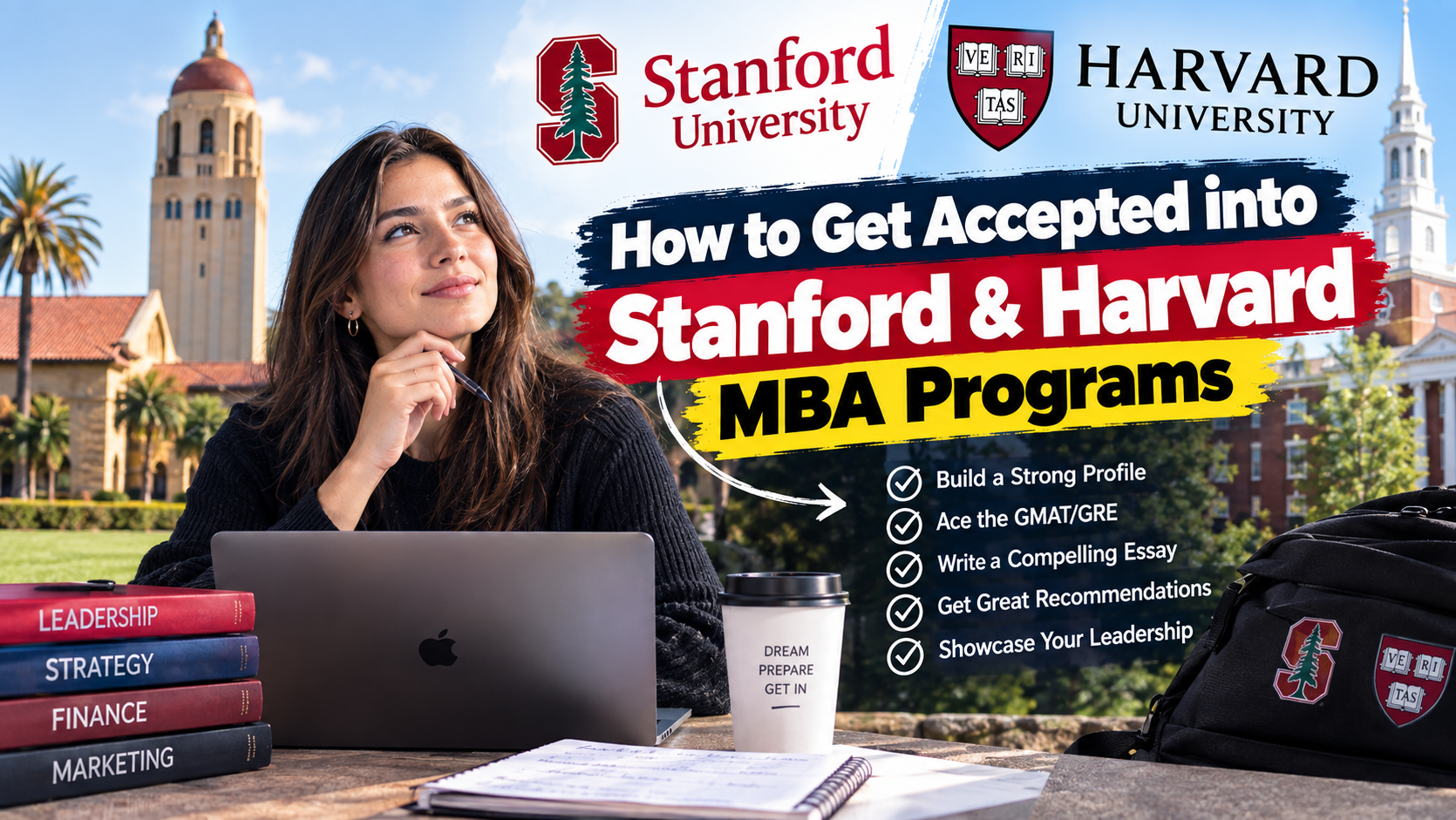
Gaining admission to top-tier Master of Business Administration (MBA) programs like Harvard Business School (HBS) and Stanford Graduate School of Business (GSB) requires more than exceptional academic and professional credentials. Because the vast majority of applicants are fully qualified, success depends on strategic differentiation, personal storytelling, and strong recommendations.
Beyond Academic Qualifications and Test Scores
While high standardized test scores (GMAT or GRE) and strong undergraduate academic performance are prerequisites, they are not sufficient on their own to guarantee admission.
- Competitive Baseline: High GMAT scores (730–740+) represent the norm among applicants rather than a competitive advantage.
- Selective Acceptance Rates: Approximately 60% to 70% of the applicant pool meets the baseline qualifications, but overall acceptance rates remain around 4% to 8%.
- Holistic Evaluation: Admissions committees evaluate leadership potential, personal values, and unique contributions beyond quantitative metrics.
Strategic Application Essays and Storytelling
Admissions essays serve as the primary medium to articulate identity, leadership impact, and alignment with institution-specific values.
- Beyond the CV: Essays should not summarize work experience or list resume accomplishments. They should reveal underlying motivations, personal values, and life achievements.
- Demonstrated Impact: Successful applicants focus on how they drive change, influence teams, and make a positive impact on organizations or communities.
- Narrative Framing: Utilizing narrative techniques—such as outlining core motivations and weaving them into a cohesive story—makes the application memorable to admissions readers reviewing thousands of submissions.
| MBA Program | Key Essay Focus | Strategy |
|---|---|---|
| Harvard Business School | Leadership, personal impact, and career path | Focus on specific decisions, leadership challenges, and personal growth |
| Stanford GSB | Core values and personal drivers (“What matters most to you, and why?”) | Articulate deep self-reflection, core philosophy, and transformative life events |
Campus Engagement and Strategic Networking
Building early connections with the academic community provides valuable insights that can differentiate an application.
- Campus Visits: Attending classes, touring facilities, and meeting students or admissions teams transforms an applicant from a name on paper to a familiar candidate.
- Alumni and Student Outreach: Engaging with current students and alumni reveals qualitative insights about culture, specific courses, and campus initiatives not published online.
- Tailored Applications: Incorporating specific, non-public insights into application essays demonstrates deep interest and institutional fit.
Letters of Recommendation: Evidence-Based Endorsements
Selecting the right recommenders and guiding them effectively is critical for validating the applicant’s leadership claims.
- Selecting Recommenders: Choose supervisors or mentors who know your work deeply and can speak to specific strengths, rather than high-ranking individuals with limited direct interaction.
- Providing Concrete Evidence: Effective recommendations go beyond qualitative praise (e.g., “a great leader”) by offering specific examples and performance metrics proving real-world impact.
- Aligning Expectations: Recommenders should be briefed on application themes and key focus areas to ensure their letters complement the overall narrative.








Leave a Reply