
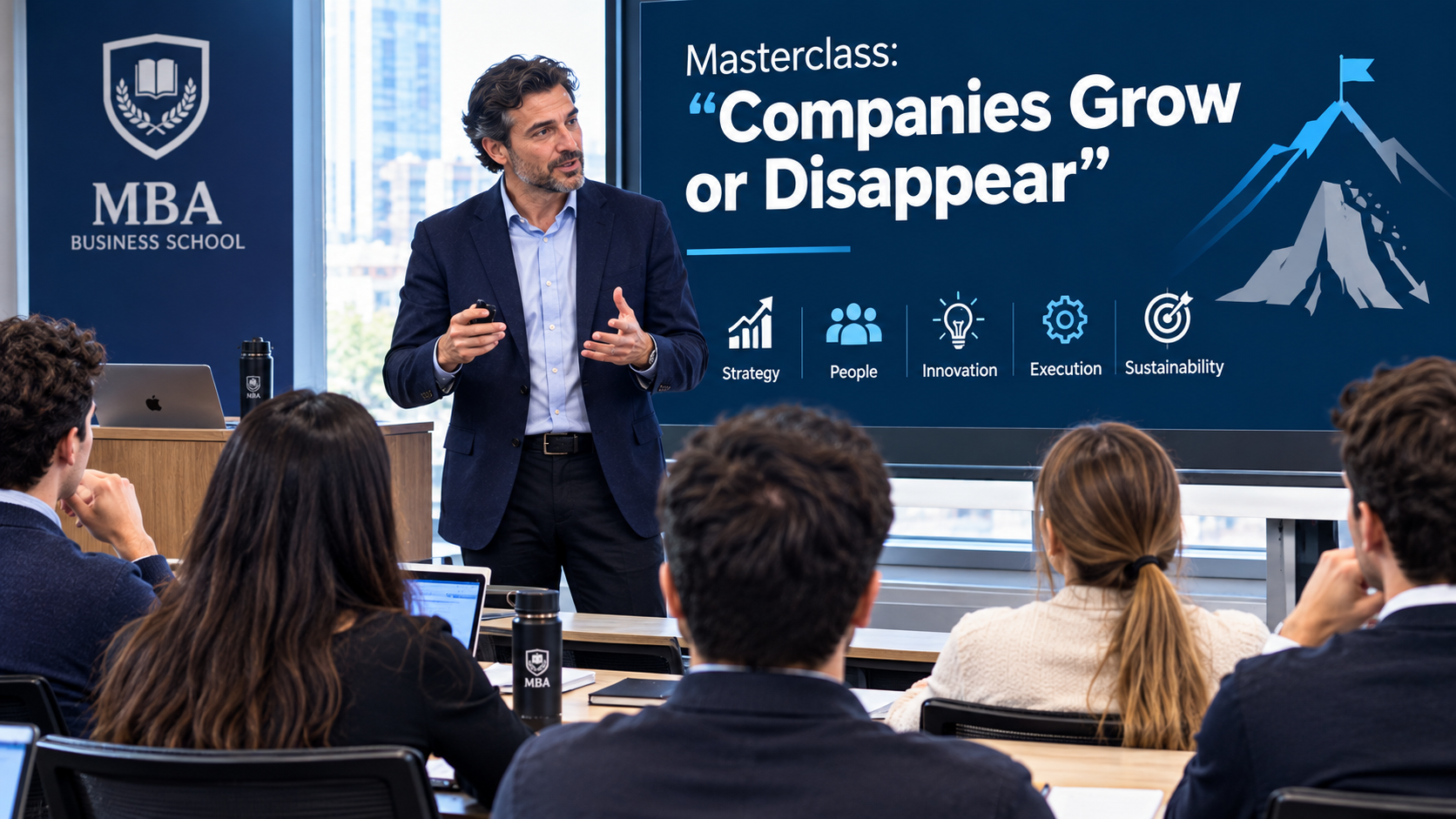
Winning Growth and Innovation in Enterprise Management
Business survival and long-term expansion depend on the continuous execution of a clear growth strategy, differentiated innovation, and capable leadership. Based on global corporate performance tracking and economic data, non-growing organizations face high rates of market departure or acquisition. Understanding the structural causes of corporate stagnation—and implementing frameworks to prevent it—is essential for sustaining competitive advantage.
Corporate Longevity and Stagnation Dynamics
Long-term survival among large corporations is rare. Data tracking top-performing global and domestic enterprises highlights how market positioning changes over time:
- Fortune 500 Persistence: Over a 60-year period, only 53 companies (roughly 10%) remained continuously on the Fortune 500 list, demonstrating the difficulty of maintaining market leadership over decades.
- Stagnation Prevalence: Approximately 95% of major corporations experience an extended period of sales stagnation during their operational lifecycle.
- Financial Impact of Decline: Multi-year revenue declines typically destroy 60% to 70% of an organization’s equity valuation, as operational restructuring alone rarely substitutes for top-line revenue growth.
Key Drivers of Corporate Stagnation
Research into corporate performance identifies strategic decisions—rather than external market shocks—as the primary drivers of business decline.
| Cause Category | Share of Cases | Primary Mechanisms |
|---|---|---|
| Strategic Failure | ~70% | Core business neglect, ineffective innovation, failure to respond to low-cost or tech-driven competitors (“Captive Leader”) |
| Organizational Deficits | ~17% | Talent shortages, lack of executive capabilities, weak leadership alignment |
| External Factors | ~13% | Macroeconomic downturns, regulatory changes, natural disruptions |
Primary Causes of Stagnation
├── Strategic Failures (70%)
│   ├── Captive Leader Syndrome (Hesitation to cannibalize existing business)
│   ├── Ineffective or Insufficient Innovation
│   └── Abandonment of the Core Business Model
├── Organizational & Leadership Deficits (17%)
└── External Market Factors (13%)
Strategic Framework for Sustainable Growth
Preventing stagnation requires balancing core operations with disciplined market expansion and innovation frameworks.
- Protect and Revitalize the Core: Prioritize the primary products, key customer segments, and high-performing distribution channels that generate the majority of enterprise revenue before attempting adjacent diversification.
- Disciplined Innovation: Move beyond incremental adjustments by establishing structured, measurable innovation pipelines focused on clear customer value propositions.
- Proactive Business Model Adaptation: Address emerging low-cost or technology-driven market entrants directly, opting to evolve internal operations rather than ceding market share.
- Internationalization and Scalability: Design business models capable of expanding beyond domestic boundaries, leveraging global service networks, digital platforms, and cross-border trade opportunities.
Explore related strategic frameworks:
Analyze the ‘Captive Leader’ dilemma and market cannibalization.











Leave a Reply